

If you've ever tried to keep training indoors while carrying an injury, you already know the problem: a static trainer doesn't care that your hip is sore, your knee is rebuilding, or your lower back can't hold one fixed position for an hour straight. It locks your bike — and your body — in place, and makes you absorb every pedal stroke through the same handful of pressure points, ride after ride.
For riders managing an injury, that rigidity isn't just uncomfortable. It's often the reason they stop training altogether at exactly the point recovery depends on staying consistent.
The problem isn't your fitness; it's the static setup
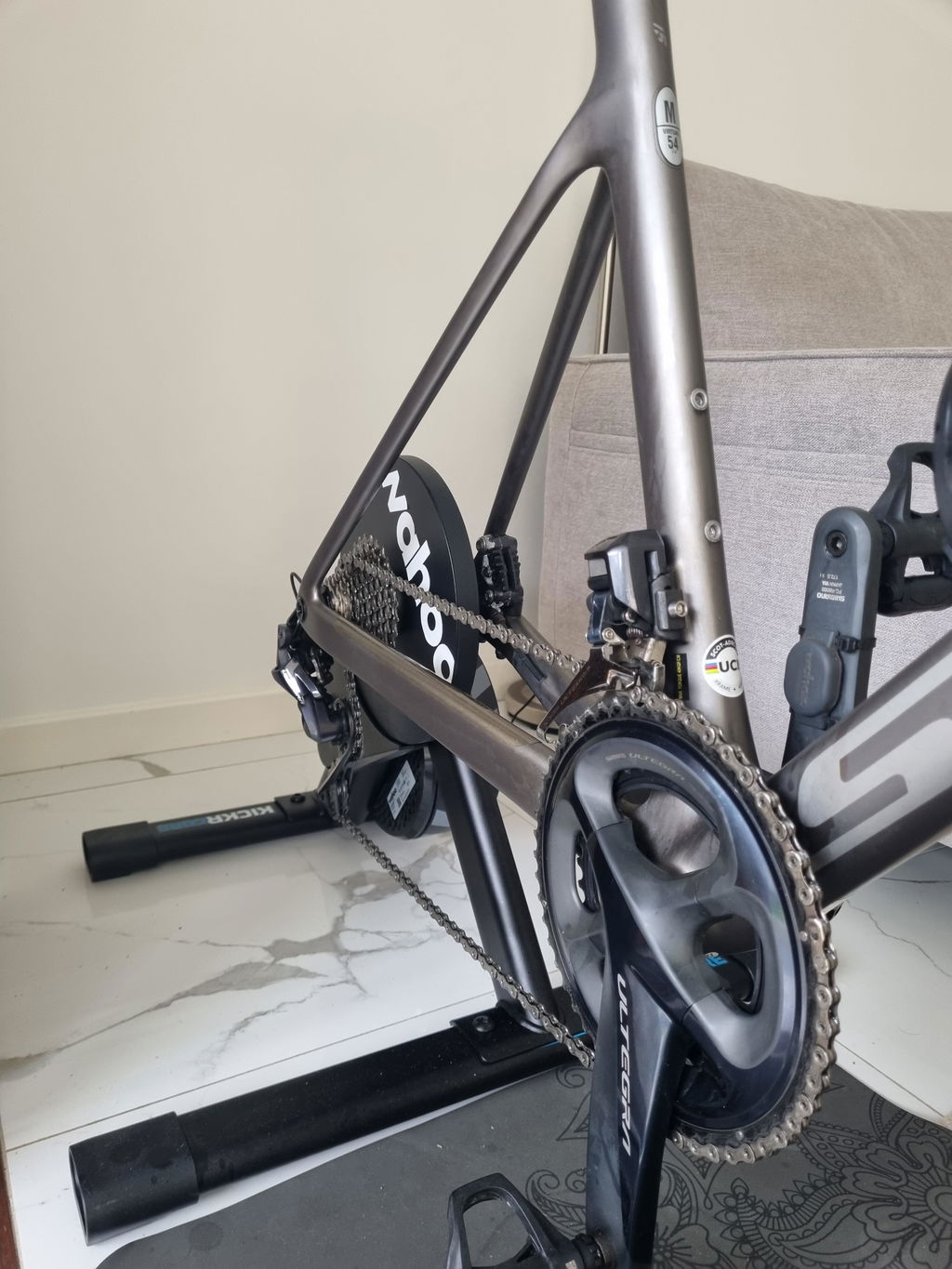
A conventional trainer holds your bike dead still. On the road, your bike naturally rocks and shifts under you with every pedal stroke, subtly redistributing load across your saddle, hands, hips and back. Take that movement away, and all of that load has nowhere to go except into whatever part of your body is already compromised.
This is exactly the pattern we hear from riders coming to indoor cycling with an existing injury or post-surgical recovery: it's not that they can't ride, it's that the static trainer makes riding actively worse for the area they're protecting.
What changes when you add controlled movement back in
A full-motion rocker plate sits underneath your trainer and reintroduces the natural side-to-side and fore-aft movement a bike has on the road. Instead of locking your body into one fixed position for the length of a session, it lets your hips, saddle contact and upper body shift and redistribute load the way they would outdoors — which is precisely what makes longer, more comfortable indoor sessions possible during recovery.
Paragon customer Alix Watson put it simply after switching to a P3 Rocker Plate while recovering from surgery:
"With a titanium knee and some hardware in ankle and foot, long trainer sessions were painful. I decided it was time to soften my ride and the Paragon rocker plate made in Australia was a no brainer. I'm so pleased with it and already the body is much happier. Long rides while still recovering are now possible."
It's a theme we hear consistently, not just from riders in early recovery but from those managing longer-term conditions and still training seriously. Paragon rider Robyn used a P3 Full-Motion Rocker System to prepare for the Ironman World Championships in Kona while managing recovery, and described the difference in comfort as central to keeping her training on track:
"Its dynamic movement absorbs the impact and pressure, distributing it evenly throughout the ride. I can now pedal for longer durations without discomfort and numbness."
Across the wider rocker plate community, this pattern shows up again and again: riders managing genuine physical limitations describing a rocker plate as the difference between being able to train consistently or not at all — not a marginal comfort upgrade, but the thing that keeps them on the bike through a recovery period they might otherwise have had to train through in pain, or not train through at all.
Why this matters more than raw comfort
Consistency is what actually drives recovery and fitness outcomes — not any single hard session. A setup that lets you complete a 60-90-minute ride without your body fighting the bike beneath you is what keeps a rehab program, a return-to-fitness plan, or a race build on track.
That's the real case for a rocker plate during injury recovery: it's not about making indoor cycling feel nicer. It's about removing the one variable — a rigid, unmoving trainer — that turns a manageable ride into one your body has to fight through.
Riding through recovery? Here's where to start
If you're training indoors while managing an injury, surgery recovery, or a chronic condition that makes long static sessions uncomfortable, the P3 Full-Motion Rocker System is engineered specifically to reduce the saddle pressure, hip strain, and upper-body fatigue that static trainers create — with full side-to-side, fore-aft, and riser turn block movement in one Australian-made unit.
Already have a riser you're happy with? The P3 Full-Motion Rocker Plate™ gives you the same side-to-side and fore-aft motion without the built-in riser.
Have your own recovery story on a P3? We'd love to hear it — get in touch and let us know.
Leave a comment